Emergency
- Emergency Dial : 119 (Ambulance/Fire), 110 (Police)
- Medical Institute with English assistance : see the list>>
Earthquake
Basics
- Earthquake could happen anywhere, almost everyday.
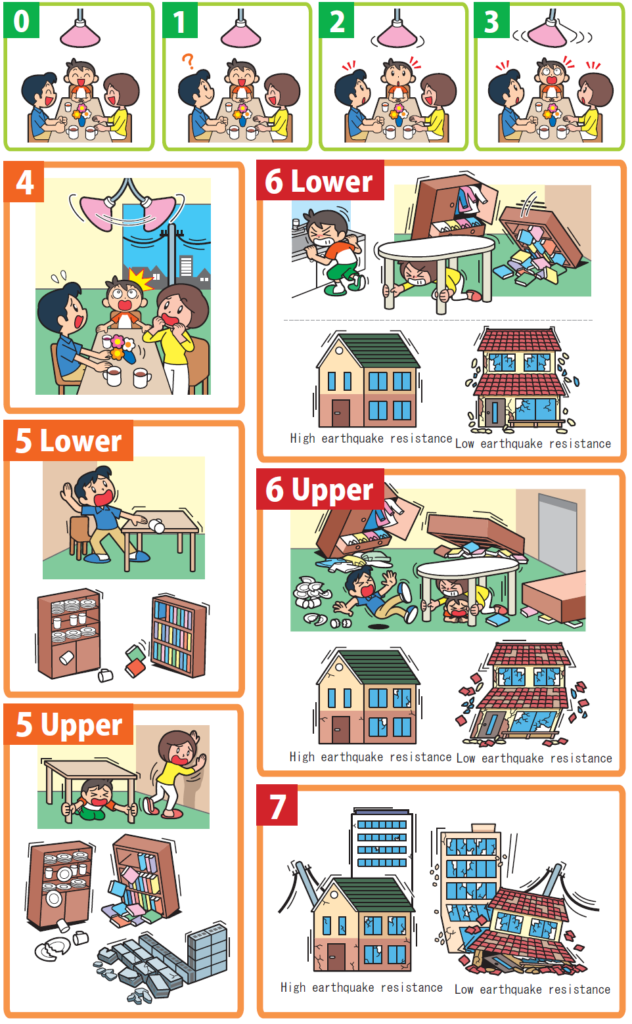
- Seismic intensity (degree of shaking) is scaled in 10 levels ( 0 – 7 ). * “0” is imperceptible. Magnitude is total energy released by the earthquake.
- You should pay particular caution, or protect yourself, at the seismic intensity of 5 and above.
- There were total of 2,424 perceptible earthquakes in 2021, 10 of which scaled above 5.
What to Do/Don’t in case of earthquake?
- STAY low, COVER your head,and HOLD ON until the shaking stops.
- Do NOT use lift. Minimize use of mobile phone for saving battery consumption.
- Look for safety evacuation area, or nearby park or school garden.
Useful webpage:
Japan Meteorological Agency (earthquake information in English).
Typhoon
Basics
- Typhoon season runs from July to mid-October, with August and September being most active.
- On average, 25 typhoons are observed on the Pacific Ocean side of Japan annually, and some of them cause serious damage e.g. flood, blackout, public transport suspension.
- Okinawa, Kyushu, Shikoku and coastal areas west of Kanto are more affected by typhoons than Tohoku and Hokkaido region.
- Public transport and commercial outlets may be closed when heavy rainstorm is approaching.
What to Do/Don’t when typhoon is approaching
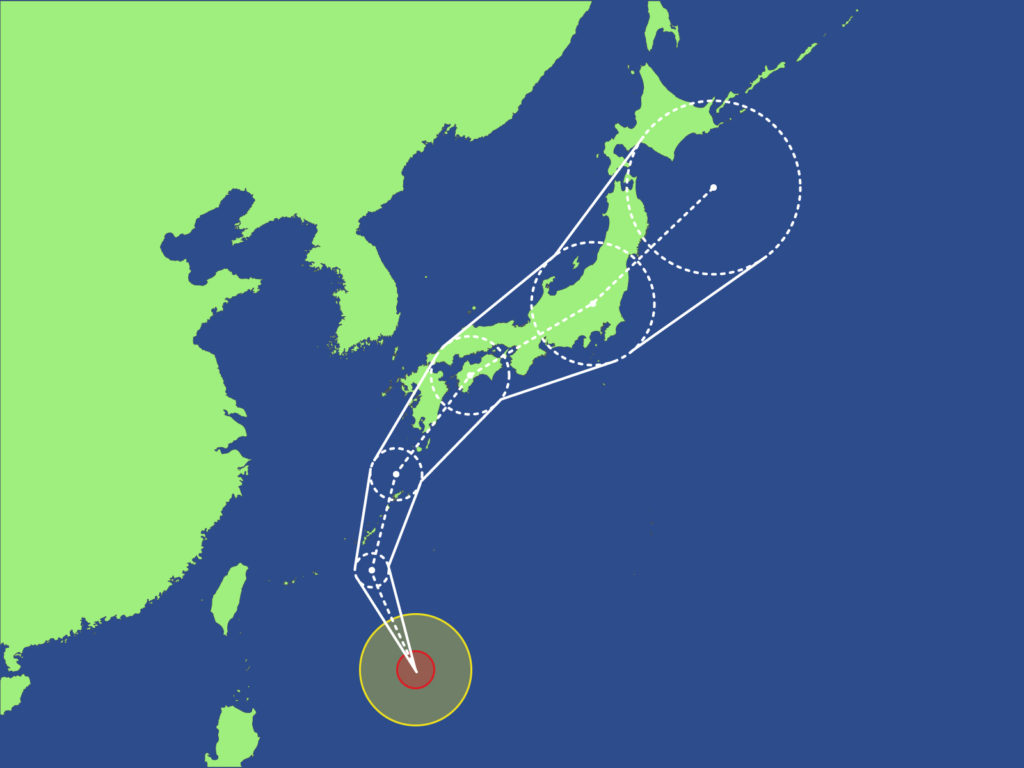
- Typhoon forecast including expected course can be found on Japan Meteorological Agency or other media e.g. NHK, weather news.
- Make sure you have enough food and water for a day, charge your mobile phone and power bank in case of blackout.